One Yes, Twelve Dates: How to Pitch a Monthly Residency Without Wrecking Your Calendar
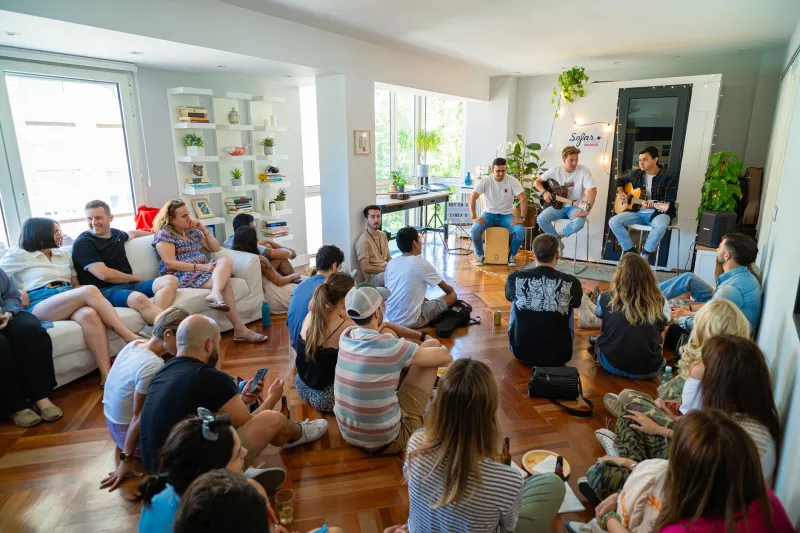
Most demo artists are trained to chase the next date. You book a brewery taproom on a Saturday, play a strong set, collect a check, and then watch the calendar go quiet again. The cycle repeats because every gig is treated like a transaction. The venue gets one night of entertainment. You get one night of income. Nobody has a reason to make it a habit.
A monthly residency flips that math. Instead of asking a venue to take a chance on a stranger every few weeks, you become the reliable thing they can build a night around. For you, that means a predictable anchor in the calendar, a repeat audience, and far less time spent pitching cold. The catch is that a residency pitch has to be structured like a small business arrangement, not like a request for a favor.
The Venue Problem You Are Actually Solving
Venue managers are not sitting around wishing more artists would email them. They are trying to fill specific nights, keep regulars happy, and reduce the admin work that comes with booking one-off entertainment. A monthly residency solves a programming problem. It gives them a known quantity on a recurring date, which makes promotion easier and staffing more predictable.
That is why the pitch should lead with the venue's calendar, not your dream. If you can say something like, I noticed your Thursday nights are quieter, and I can build a repeatable early-evening set that gives people a reason to come in after work, you are speaking their language. You are not asking them to bet on an unknown artist. You are offering a tested format.
Pick a Repeatable Format Before You Write the Pitch
A residency works best when the audience knows what it is getting. That does not mean playing the exact same set every month. It means having a clear container: a duo format, a stripped-down acoustic set, a themed night, or a two-hour rotation that fits the room. The format should be easy to describe in one sentence and easy for the venue to promote.
Choose a realistic frequency and day. Monthly is usually the sweet spot for a first residency. Weekly sounds impressive, but it can burn through your material, your audience, and your patience fast. Pick a night that gives the venue a reason to say yes, even if it is not Friday or Saturday. A Sunday brunch set or a Wednesday listening room can become a dependable asset because the competition for those slots is lower.
The Proposal: Short, Specific, and Easy to Say Yes To
Do not send a five-page deck. Send a concise proposal that answers the questions a venue manager will ask before they finish reading. A sample structure looks like this:
- The offer: A monthly two-hour set on the second Thursday of each month, starting with a three-month pilot.
- The format: Solo acoustic with looping, leaning toward familiar covers and a few originals that fit the room.
- The draw: You will promote to your email list and socials, tag the venue, and invite three nearby business partners to cross-promote.
- The money: A flat performance fee or a guaranteed minimum plus a simple revenue share, with payment terms spelled out.
- The setup: Your tech needs fit on one page, and you can work within the venue's existing sound system.
- The out: Either side can end the arrangement after the pilot with two weeks' notice.
The three-month pilot is important. It gives the venue a low-risk way to test the concept, and it gives you enough dates to judge whether the night is actually building. A six-month commitment sounds good in theory, but it can become a trap if the venue's audience does not show up or the room turns out to be a bad fit.
Price the Commitment, Not Just the Night
A residency discount is reasonable, but do not give away the farm. If your one-off rate is $600, a monthly residency might be priced at $525 to $575 per date with a four-date minimum. The venue gets a predictable rate and less booking hassle. You get guaranteed work and fewer gaps to fill.
There are a few pricing structures that work well. A flat monthly fee is the simplest. A guaranteed minimum plus a percentage of bar sales can align incentives, but only if you trust the venue's reporting. A pilot rate for the first three months, followed by a modest increase, is another option, as long as the increase is agreed to upfront. Whatever you choose, put deposit terms, cancellation policy, and payment timing in writing. A residency is still a business relationship.
Guardrails That Keep the Residency From Eating You
The biggest risk with a recurring date is that it becomes a permanent obligation with no room to breathe. Build guardrails before you sign anything. Cap the number of dates per month. Decide how much promotional work you will actually do. Set a clear load-in and soundcheck window so the night does not swallow your whole evening. Agree on a sub policy in case you get sick or land a conflicting opportunity.
Also, schedule a check-in after the third date. Ask the venue what is working and what is not. If the night is not building after a fair trial, end it cleanly. A residency should be a foundation, not a cage. The artists who make recurring dates work are the ones who treat them like a system with review points, not a handshake that lasts forever.
The Side Benefit: A Crowd That Knows Where to Find You
The financial predictability is nice, but the audience habit is the real prize. When you play the same room on the same night, people start to plan around it. They bring friends. They know the bartender. They know what time you go on. That kind of repeat exposure is hard to buy with one-off gigs.
Use the residency to build a list, not just a set. Put a QR code on the table. Mention the next date from the stage. Take photos that show the room filling in. After a few months, you will have something more valuable than a single booking: proof that you can be a dependable part of a venue's weekly rhythm. That is the kind of proof that makes the next residency pitch much easier.