Better Together: How Smart Collaborations Turn Demo Artists Into Portfolio Powerhouses
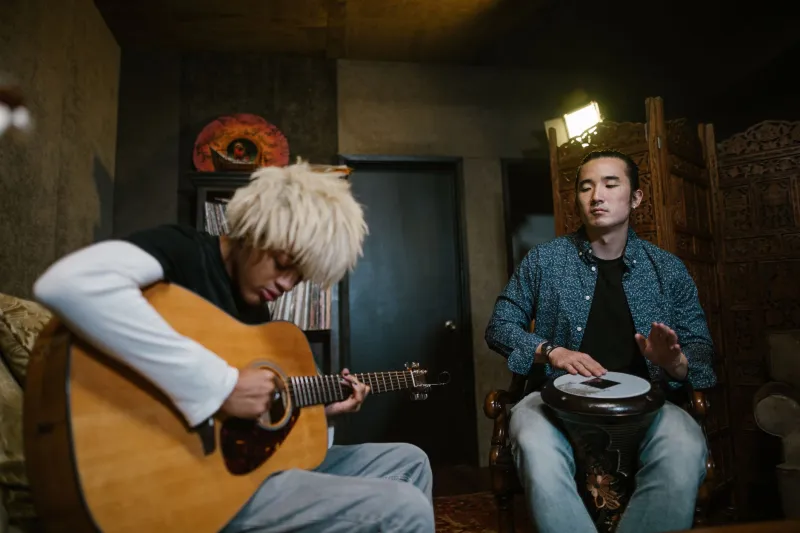
Let's be honest — building a demo portfolio from scratch is slow going. You're waiting on paid gigs to stack up, hoping each booking leads to the next, and somewhere in the middle you're wondering why your reel still feels thin. Here's the thing: you don't have to wait for clients to build your body of work. Strategic collaborations can fill those gaps fast — if you approach them with intention.
The keyword there is strategic. Random collabs with anyone who slides into your DMs? That's a time sink. But partnerships built around shared goals, complementary skills, and a clear creative vision? Those can change your trajectory.
Why Collaboration Is Actually a Business Move
There's a tendency in the music world to think of collaboration as purely a creative exercise — two artists jamming until something cool happens. And sure, that's part of it. But for demo artists trying to grow their booking business, collaboration is also a portfolio strategy.
Think about it this way: every project you complete with a producer, songwriter, or fellow performer is a new piece of evidence you can show potential clients. It demonstrates range. It shows you can work with other professionals. And if that collaborator already has an audience or a client base, you're suddenly visible to people who never would have found you otherwise.
The best part? A well-documented collaboration — whether it results in a polished demo track, a live performance video, or even a behind-the-scenes reel — becomes content you can use everywhere. Your website, your booking pitch, your social channels. One project, multiple touchpoints.
Finding the Right People to Work With
Not every musician or producer is the right fit for a strategic partnership. Before you reach out to anyone, get clear on what you actually need. Are you looking to add a specific genre to your demo reel? Do you want to show off your versatility in a different format — maybe acoustic versus produced? Are you trying to tap into a new regional market?
Once you know what you're after, look for collaborators who:
- Fill a gap you have. A pop-leaning demo artist pairing with a country producer creates something neither could make alone — and opens both of their networks.
- Share a similar level of professionalism. This isn't about clout-chasing. It's about finding someone who shows up, communicates, and follows through.
- Have a different but overlapping audience. You want crossover, not carbon copies. If your followers are already the same people, the collaboration won't expand either of your reaches.
- Are genuinely excited about the project. Enthusiasm is contagious, and frankly, forced collabs always sound like it.
Local music scenes are goldmines for this. Check out open mics, recording studios, and industry meetups in your city. Nashville, LA, Atlanta, Austin — every music hub in the US has a community of working artists looking for exactly what you're offering.
Structuring Partnerships So Everyone Wins
Here's where a lot of artists drop the ball: they go into a collaboration without any kind of agreement, things get murky, and what started as a great idea ends in awkwardness. Don't let that be your story.
You don't need a 20-page legal document for every collab, but you do need to have the conversation upfront. Cover these basics before a single note gets recorded:
Who owns what? If you're creating a new track together, who holds the master recording? Who owns the composition? Will both parties be able to use the finished product in their own portfolios?
What's the timeline? Set a rough deadline. Open-ended projects have a way of never getting finished.
How will you both use the content? Agree on how each person can share, promote, and credit the work. This avoids the awkward situation where one person posts something the other wasn't ready to release.
Is there any money involved? Not every collaboration needs to be paid, but if there are studio costs or production fees, figure out who's covering what before you start.
A quick written summary — even just an email recap of what you discussed — goes a long way toward keeping things clean.
Using Collaborative Work as Proof-of-Concept
Here's a move that not enough demo artists are making: using collaborative projects as a proof-of-concept pitch for larger bookings.
Say you team up with a local songwriter and record a demo that showcases your ability to interpret original material. That track isn't just a cool addition to your portfolio — it's a demonstration to corporate clients, event planners, and music supervisors that you can handle custom work. You're not just a cover artist. You're a versatile creative professional.
Same idea applies if you collaborate on a live performance video with another musician. That footage shows potential bookers what you look like in a real performance context, working alongside other talent. It answers questions before they even get asked.
When you're pitching for bigger gigs, pull these collaborative projects front and center. Frame them specifically: "I worked with producer [name] to develop this original track for a product launch pitch — here's how it came together." That kind of context turns a portfolio piece into a story, and stories close bookings.
Avoiding the Unpaid Project Spiral
Look, not every collaboration needs to be a paid engagement. Building your portfolio sometimes means investing time upfront. But there's a difference between a smart creative investment and a never-ending cycle of free work that doesn't move the needle.
A few guardrails to keep yourself out of that spiral:
- Set a project limit. Decide how many unpaid or low-pay collaborative projects you'll take on in a given quarter. When you hit that number, everything else needs to make financial sense.
- Evaluate the return. Before saying yes, ask yourself: will this project generate usable portfolio content? Does this collaborator have an audience or network that's valuable to me? Is there a realistic path to paid work from this?
- Know when to walk away. If a project drags on past your agreed timeline with no clear end in sight, it's okay to have the conversation about wrapping it up or restructuring.
Your time is your most valuable resource. Treat it accordingly.
The Long Game
The demo artists who build sustainable careers aren't the ones who lock themselves in a room and grind alone. They're the ones who understand that music — and the business around it — is relational. Collaborations build relationships. Relationships build reputations. And reputations? Those fill your calendar.
Start with one intentional partnership. Be clear about what you want from it, put the basics in writing, and make something you're genuinely proud to show off. Then do it again. Over time, you won't just have a stronger portfolio — you'll have a network of creative professionals who know your work firsthand and can refer you when the right opportunity comes along.
That's the real ROI of strategic collaboration. And it's worth every minute you put into it.