Why Your Demo Isn't Getting You Booked — And Exactly What to Do About It
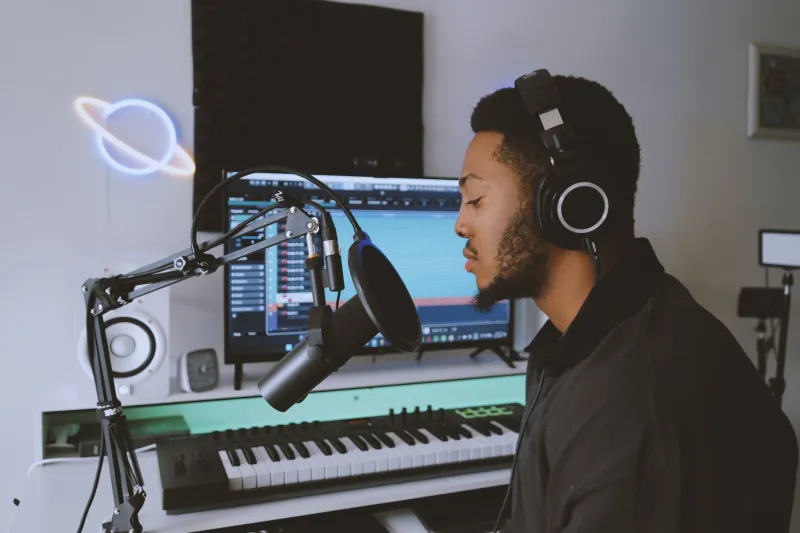
Let's be honest for a second. You've got talent. You know it, your friends know it, and anyone who's caught one of your live sets knows it too. So why is your inbox still quiet? Why are the venues, event organizers, and corporate clients you're pitching not calling back?
Nine times out of ten, the answer isn't your ability. It's your demo.
A demo track is your professional handshake. It's the first impression that happens before you ever walk in a room, before you fire up your first note on a stage, before anyone has a chance to see you perform. And if that handshake is limp — if it's muddy, too long, structurally confusing, or just not positioned correctly for the audience receiving it — it doesn't matter how good you are in person. You won't get the call.
Here's what the professionals who actually book talent are listening for, and how you can make sure your demo delivers.
Production Quality Is Non-Negotiable — But Not in the Way You Think
Before anything else, let's talk about sound quality. The good news is that you don't need to spend ten grand in a high-end studio to produce a demo that sounds professional. The not-so-good news is that you do need to understand what "professional" actually means in this context.
A demo recorded on a decent interface with proper gain staging, thoughtful mic placement, and clean editing will beat an expensive studio session that's poorly mixed every single time. Booking coordinators and event planners are not audiophiles hunting for sonic perfection. What they're listening for is clarity. They want to hear you — your voice, your instrument, your style — without fighting through a wall of noise, distortion, or reverb soup.
Common mistakes that kill demos before they even get a fair listen: too much reverb masking pitch issues, inconsistent volume levels between tracks, and recording environments with obvious room noise or echo. Fix those three things and you're already ahead of a huge percentage of demos that hit booking desks every week.
The First 30 Seconds Are the Entire Ballgame
Here's something most artists don't want to hear: the person listening to your demo probably won't make it past the 30-second mark if you haven't grabbed them by then. This isn't a reflection of their attention span — it's a reflection of their workload. Talent buyers, event coordinators, and venue bookers are reviewing dozens, sometimes hundreds, of demos. They've developed a fast filter, and they're not apologizing for it.
This means your demo cannot start with a slow build, a lengthy intro, or a meandering instrumental section that's supposed to "set the mood." It needs to establish your identity immediately. Open with your strongest moment. Your best hook, your most distinctive vocal run, the musical moment that makes someone say "oh, wait" and reach to turn up the volume.
If your best stuff is buried in the middle of your demo, restructure it. Chronology doesn't matter here. Impact does.
Song Structure Signals Professionalism
Beyond the opening moments, the overall structure of your demo tells a booking professional a lot about how you think as an artist. A well-constructed demo for a professional booking context isn't just a collection of your favorite tracks. It's a curated narrative that demonstrates your range while maintaining a coherent identity.
For most booking scenarios — corporate events, venue residencies, private events, brand activations — a demo that runs three to five minutes total and includes two to three distinct pieces is the sweet spot. Each piece should show something slightly different: maybe one track showcases your energy and stage presence, another demonstrates your technical skill, and a third reveals your versatility or ability to shift tone.
What you want to avoid is a demo that feels like a random shuffle of your catalog. Every transition should feel intentional, like you've thought about the listener's experience from beginning to end.
Pitching to the Right People, in the Right Way
Even a flawless demo fails if it lands in the wrong inbox or arrives with the wrong context. Pitching your demo is a skill that's entirely separate from creating it, and it deserves just as much attention.
Different buyers want different things. A venue booker in Nashville is evaluating you against a completely different set of criteria than a corporate event planner in New York or a brand experience manager in Los Angeles. Your pitch — the email, the message, the accompanying materials — should reflect that you understand who you're talking to.
For venue bookings, lead with your draw. How many people do you bring out? What's your history at similar venues? For corporate and brand clients, lead with professionalism and versatility. What can you customize? What's your experience in non-traditional performance settings? For event organizers running festivals or private events, lead with reliability and range. Can you adapt to different crowd energies? Do you have strong references?
The demo is the evidence. The pitch is the argument. You need both working together.
The Artists Who Stay Booked Think Like Partners, Not Performers
Here's the mindset shift that separates the demo artists who build sustainable professional careers from those who have a few good months and then fade out: the most consistently booked artists think of themselves as collaborative partners in the experiences they're hired to create, not just performers executing a set list.
When you approach a booking conversation with questions — What's the event's goal? What's the audience like? What moment in the event are you hoping my performance creates? — you immediately differentiate yourself from every other artist who just sent over a link and a rate sheet.
Your demo gets you in the room. Your thinking keeps you there. And the artists who combine a genuinely compelling demo with a strategic, client-focused approach to pitching? They're not chasing bookings. The bookings are chasing them.
Start With What You Can Control
If you take one thing from this, let it be this: you have more control over your booking success than you might think. The talent is already there. The gap is almost always in how that talent is packaged, presented, and pitched.
Record a cleaner demo. Restructure it so your best moment hits first. Customize your pitch for each specific buyer. And approach every booking conversation as a creative partner, not just a vendor.
Do those things, and the silence in your inbox starts to sound a whole lot different.